Recipe apps without a subscription (2026 edition)
Recipe apps that don't bill you forever. The real list of subscription-free options, what each one costs once, and the math on what you save vs. monthly plans.
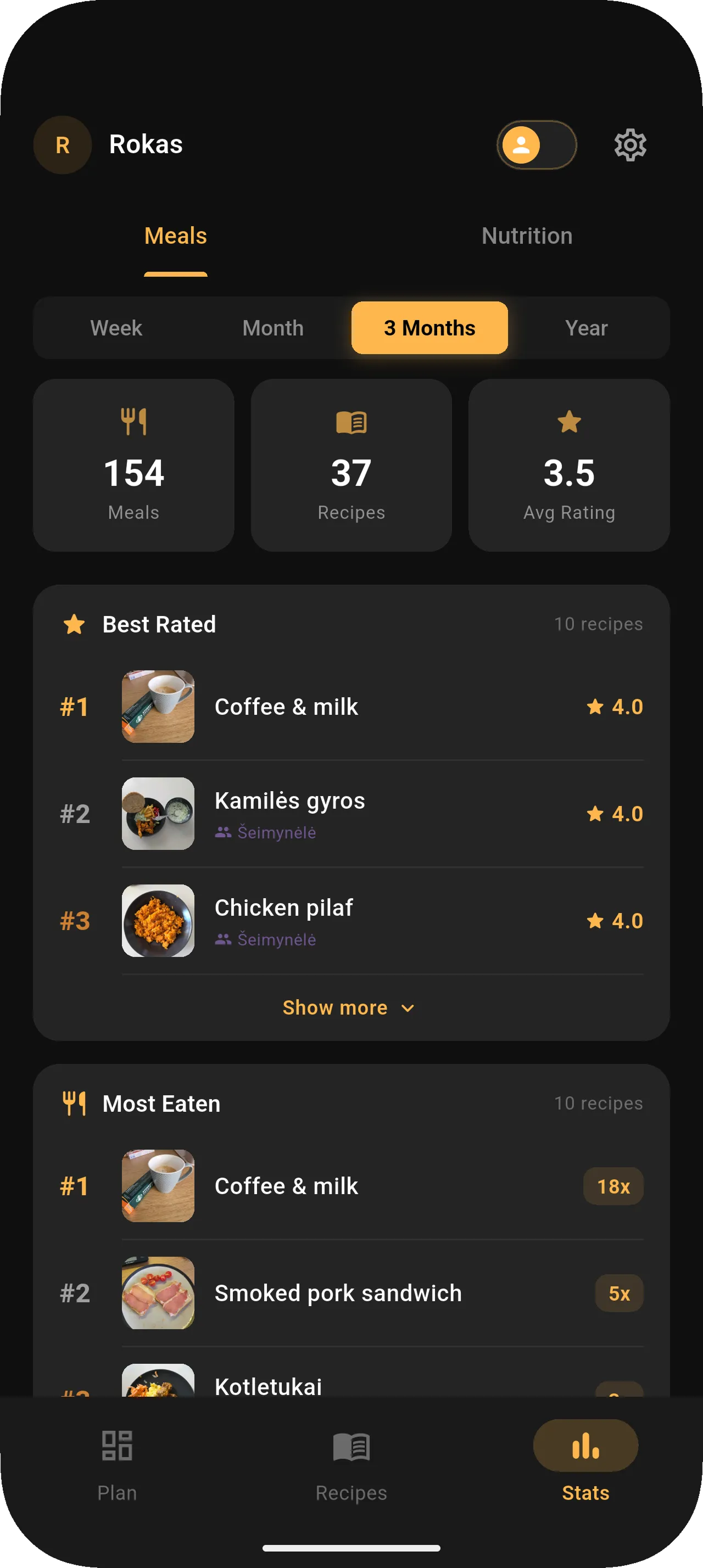
A recipe app shouldn’t cost more per year than your knife block.
And yet, somehow, the trend is clear: the apps that started life as honest one-time purchases — or as free tools — have mostly migrated to “$4.99 a month, every month, until you cancel or die.” Open the App Store, sort recipe apps by what’s popular, and a depressing share of the top 20 are subscriptions.
This post is the opposite list. Recipe and meal-planning apps where you can pay once (or nothing) and stop thinking about billing. We’ll show the real numbers, including the ones that have quietly shifted to subscription, and explain why Forkplate stayed honest about pricing.
The math, before we get to the list
Take a $4.99/month “Premium” plan. Sounds harmless.
- 1 year: ~$60
- 3 years: ~$180
- 5 years: ~$300
For a recipe app you mostly use to remember how your mum cooked carbonara.
Compare that to the typical one-time price of a paid recipe app — $5 to $15 — and the gap is absurd. The subscription model isn’t priced because the product genuinely costs more to run; it’s priced because investors want recurring revenue, and recurring revenue is recurring whether you opened the app this month or not.
Recipe apps that don’t have a subscription
These are the ones still doing one-time pricing or genuinely-free tiers as of 2026. Some have a paid tier on top, but you can use them long-term without recurring fees.
Forkplate — free, with a $9.99 one-time upgrade
Free tier covers up to 50 recipes, full meal planning, calorie + macro tracking, and the recipe spinner. No ads, no banners, no nags. If you outgrow 50 recipes, Solo is a single $9.99 in-app purchase that unlocks unlimited recipes for life. Cloud sync and family sharing exist as separate subscriptions, but they’re optional add-ons — the core product is permanently usable without one.
Paprika — $4.99–$9.99 once, per platform
Paprika is one of the best-known one-time-purchase apps and a genuine OG. The catch: each platform is its own purchase. iOS, Android, macOS, Windows — pay once for each. So if you want it on your phone and your laptop, you’re paying twice. Still cheaper than a subscription long-term, but not the “one purchase, all devices” deal it sometimes gets credited as.
Crouton — $14.99 once (iOS/macOS)
Beautifully designed, premium-feeling iOS-and-macOS recipe manager. Higher one-time price than Paprika, no Android version. If you live in Apple’s ecosystem and care about design, this one’s worth a look. If you don’t, skip it.
Recipe Keeper — free with optional in-app purchase
Free tier with most features, very modest in-app purchases for a few extras. Not the prettiest app in this list, but the pricing is honest and the data export works.
Mealie / Tandoor / Cook’d Pro — self-hosted, free
If you’re the kind of person who already runs a home server, the open-source recipe manager world (Mealie, Tandoor Recipes, Cook’d Pro) is wide open and costs nothing. Steeper setup curve, but ultimate ownership of your data and zero recurring cost.
Recipe apps that do charge a subscription
For honesty, here’s the other side of the list — apps you’ll see ranked highly that quietly want monthly money.
- Mealime — ~$3–6/month for premium meal plans.
- Whisk — Free tier is genuinely capable, but household + premium features are a subscription (~$5/month).
- Yummly — Free tier has lost features over the years; full features ~$5/month.
- AnyList — Free tier is fine for a single user; sharing across a family requires a subscription (~$8/year — at least it’s annual, not monthly).
- Yazio — Calorie-counter-with-recipes, ~$3–6/month or annual.
- Lifesum — Similar shape, ~$5–10/month depending on the plan.
- PlateJoy — ~$13/month or $99/year. Yes, really.
A few of these are good products. None of them is so good that it justifies $60+ a year for the rest of your life to remember how you make weeknight pasta.
Why Forkplate priced this way
Three reasons, none of them complicated.
The product mostly runs on your phone. Forkplate is offline-first. Your recipes, your meal plans, your ratings, your nutrition data — they live on your device. There’s no recurring server cost to justify a subscription on the core product.
Sync is the only thing that genuinely costs us. When you turn on cloud sync (Solo Cloud) or share a family cookbook (Family), there’s real ongoing infrastructure cost — storage, bandwidth, image processing. So those are subscriptions, fairly priced. But the core — your private cookbook, planning, tracking — costs us almost nothing per user, so it shouldn’t cost you $5 a month.
Trust compounds. People talk. Cooks recommend apps to other cooks. The fastest way to lose a recommendation is to make someone feel ripped off six months in. We’d rather build something you stop using than something you cancel angrily.
So what should you actually pick?
A simple decision tree:
- You want a free app that just works, with optional one-time upgrade later → Forkplate
- You’re an Apple-only household and want maximum polish → Crouton ($14.99 once)
- You want the most powerful web clipper and don’t mind paying per platform → Paprika
- You’re a homelab person who runs your own services → Mealie or Tandoor
- You’re fine with subscriptions and want algorithmic meal plans → Mealime or PlateJoy
If you’ve been on the subscription treadmill for a while and you’re tired of it, this is your sign. The apps that don’t charge you forever still exist. They just don’t have the marketing budget of the ones that do.